

In the seventh millennium, AD, Galactica is the only surviving battleship after an attack by the evil Cylons. As a result of the attack, peace is destroyed and most of humankind have been wiped out. Led by Commander Adama, Galactica and a hundred or so smaller ships flee to try to find refuge on the legendary but unknown planet Earth. The Cylons, with the help of the equally evil Count Baltar, are in hot pursuit.
Courtesy of Universal
With the release of George Lucas’s Star Wars in 1977, no one could have predicted the FORCE it would become, breaking box office records for 20th Century Fox, despite initial doubts from the studio. Then, in late 1977, Universal Television reportedly had a “top secret project” in development for the 1978-1979 upcoming season called Star Worlds. Considered a small-screen version of Star Wars, it would feature special effects from the legendary John Dykstra—the man responsible for the special effects in Star Wars. Eventually, the title would change to Battlestar Galactica and would go on to become one of the most expensive series ever produced for television. The show was praised for bringing a unique blend of myth, heart, and ambition to network television, which helped it stand out in the science fiction genre. Many fans were eager for new episodes, but the show was eventually canceled after just 24 episodes due to high production costs, declining ratings, and reported legal issues. Its final episode, “The Hand of God,” aired on April 29, 1979. Despite its cancellation, the show’s dedicated fanbase and cult following, along with iconic characters like Starbuck, compelling storylines, and mythical narratives contributed to making it one of the most iconic sci-fi television series of all time.
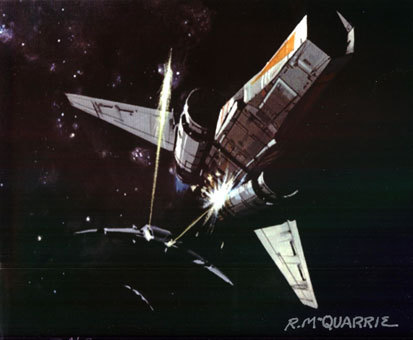
When Glen A. Larson developed the storyline for Battlestar Galactica and crafted his heroes and villains; he tapped into elements of theology, mysticism, and mythology, as well as his knowledge of classic films. And befitting a story set in a distant galaxy where the 12 human colonies are fleeing from the robotic Cylons after their homeworlds are destroyed. Led by the last remaining military vessel, the Galactica, the survivors travel across the galaxy, searching for a new home on the mythical 13th colony, which they believe is Earth. Larson’s inspirations for Galactica included Mormon theology and Egyptian culture for visual design, along with the general “quest” narrative structure of shows like Wagon Train.
Now let’s take a look at the incredible behind-the-scenes story of how the original Battlestar Galactica series was brought to the small screen.
Courtesy of Universal
The Unknown story behind the MAKING ‘BATTLESTAR GALACTICA’
Legendary producer Glen A. Larson, a talented writer with an eye in finding movies that have been successful and then transferring similar ideas to television used concepts that would make it more exciting for modern film and TV audiences. He incorporated other sci-fi related concepts that he’d enjoyed over the decades, including the idea of spacemen from other galaxies influencing our ancient history. Using direct inspiration for the core premise of the original Battlestar Galactica, Larson used Erich von Däniken’s “ancient astronaut” books the Chariots of the Gods and Mysteries of the Gods which later was reworked into the Battlestar Galactica universe we all know and love. This Adam’s Ark tale was over five hundred pages long, and was called STAR WORLDS. Set in the time frame of the Seventh Millennia of Mankind, the story was about a race of humans that belonged to the Twelve Colonies of Man would be decimated in an attack by their long time cyborg enemies, the Cylons. The remaining survivors of the colonies would gather together in a fleet of 220 ships, protected by the only surviving Colonial Fleet warship, the huge aircraft carrier-Galactica, in their search for a new home…a shiny long distant planet from ancient history carrying the lost Thirteenth Tribe of Humanity- a place of land and sea called Earth.

Courtesy of Lucasfilm
Having mistakenly turned down STAR WARS in the early seventies, Universal was looking to capitalize on the renewed audience interest in the space genre and eventually green-lit Star Worlds into production. The pilot mini-series, titled “Saga of a Star World,” was then sold to the ABC network for an undervalued $1.8 million. This initial sale allowed the project to get the funding it needed to be produced and aired.
Together, Larson and his creative team would assemble some of the biggest names in the industry, including writer and producer Leslie Stevens, who had worked with Larson on the popular sci-fi series The Outer Limits. Stevens would establish its visual aspects—making reality a believable and consistent new universe beyond anything previously attempted on television.
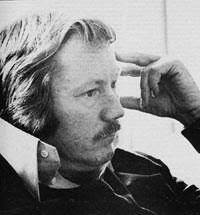
Larson would also bring along director Richard Colla, respected costume designer Jean-Pierre Dorleac, art director John Chilbers, and composer Stu Phillips, who would bring a grand, neoclassical symphonic style to the television series, revitalizing the use of a full orchestra and orchestral leitmotifs to create an epic, emotionally resonant score reminiscent of films on the big screen.
Perhaps the biggest addition to the team was none other than special effects supervisor John Dykstra, who had just won an award for his recent groundbreaking effects work on Star Wars. He would bring an innovative array of effects, which would be a key component of the show’s initial popularity and spectacle. With Dykstra now a confirmed for the entire mini-series, he and his effects crew would begin pre-production work designing creatures, spaceships, vehicles, weapons, and alien civilizations.

Courtesy of Universal
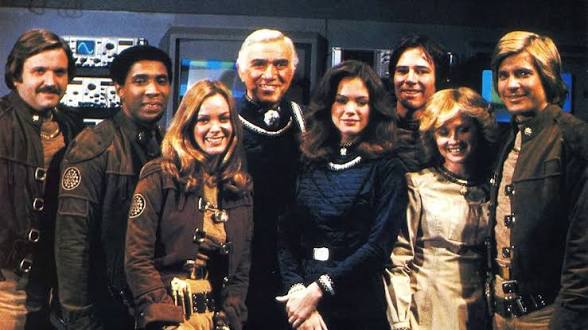
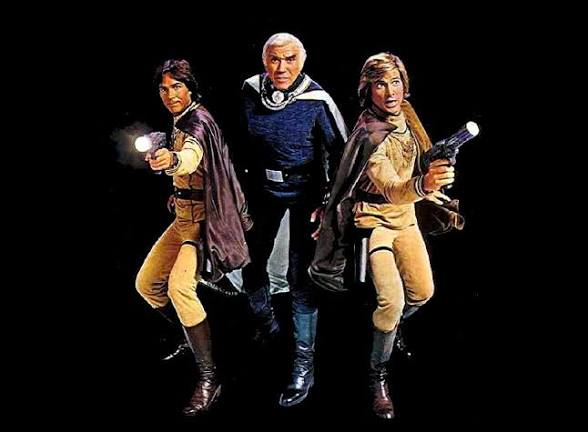
Over at the Universal Studios set building work was underway, as writing and revising of the opening scripts and the formation of the regular characters, and the casting search for the actors and actresses to play them. Richard Hatch who had just finished work on the final season of The Street of San Franciso would beat out hundreds of other hopeful actors for the role of Apollo. Larson became fascinated with the actors heroic possibilities, and viewer accessibility, that he could bring. To counter balance the good hearted Apollo would be the infamous Starbuck, a crack pilot, a cool shot with a laser, and a bit of a gambler and womanizer whom, though friends with Apollo, would challenge some of Apollo’s decision-making. Hollywood star Don Johnson was cast in the role.
Courtesy of Universal
For the female lead, Maren Jensen, a relatively new face in the Hollywood industry, at the time, would be cast as Athena, a vital member of the Galactica bridge technician team, who would be the sister of Apollo, and on and off companion to Starbuck. Actress Anne Lockhart, would also sign on as Sheba, a fierce Viper pilot.
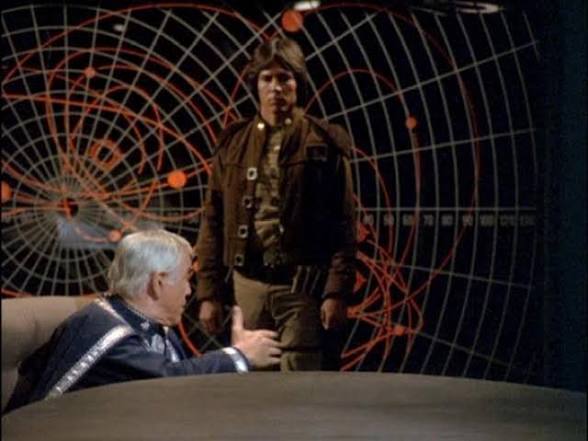
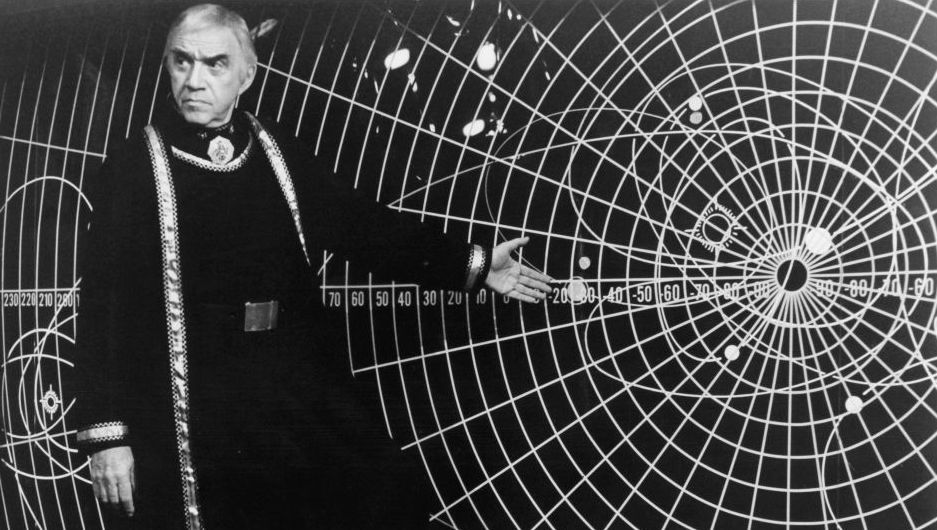
As for the choice of who would play Commander Adama, Larson needed a man of strong character who had the ability to act in crucial scenes showing great humanity, emotional depth and gain audience appreciation. The actor chosen would need to be an established image as a respected father figure in the public consciousness. Veteran actor Lorne Greene was cast in the roles as the memorable Commander. Greene was famous for his role as the benevolent but firm patriarch Ben Cartwright on the long-running Western series Bonanza. Along side Adams , and second in command on the Galactica bridge, would be Terry Carter who would play the Colonel Tigh, Carter was a fairly unknown actor, at the time, but would later prove to bring a strong personality to his show.

Courtesy of Universal
Realizing that the series main pilot needed more name actors to play supporting leads, Larson, Colla and their casting crew brought on some well known names including actor Ray Milland cast as Adama’s treacherous council rival, the greedy and duplicitous Sire Uri, ageing star Wilfrid Hyde White as fellow councilman, Anton, and Lew Ayres as the doomed President Adar.
Casting of who would play the antagonist enemy in the series would be tricky, the actor would have to be perceived by the audience of viewers as a villainous human, politician and someone who would could easily betrayed the Twelve Colonies to the Cylons. John Colicos, who had a track records of playing crafty and conniving villains was cast in the role. Also on the enemy side, the charming Patrick Macnee, would add his distinctive, un-credited voice to the reptilian Cylon leader, the Imperious Leader. Other actors cast would included a love interest for Apollo in the form of the beautiful Caprica colony newsreader Serina, played by a beautiful young actress named Jane Seymour. Serina’s part in series would be consigned to the pilot episode only, as it was planned that she would contract a terminal illness that would see her off screen demise, whilst her son, Boxey, played by little Noah Hathaway, hopefully enticing the series children viewing audience (alongside his daggit robot, Muffit. Seymour liked the script for the pilot and was intrigued by the character, playing Serina with a doomed tragic quality in its second half, and was at first thrilled to be in a film/ TV production that looked big in every sense of the word.
Courtesy of Universal
CHAOS
With the series now set for a release date of Sunday, September 17th, 1978, work on the pilot continued. Much of the budget was being spent on its two-part pilot episode more than had first been anticipated. After a discussion with ABC, production fell behind schedule and with costs rising, it was decided that it would be best to turn the event miniseries into a regular series instead, a move that added pressure for Larson and his team of writers and producers. The result caused several changes with regards to characters and storylines already being developed during and after the pilot. Additionally, at that time of chaos, Star Wars director George Lucas became unhappy with the original title of the series, Star Worlds, which resulted in it being referred to as a one-word title, GALACTICA. The show’s title was chosen because George believed it was a cheap imitation of Star Wars that diluted the science fiction television market. He felt that Galactica copied his work, including using the same visual effects techniques pioneered by John Dykstra and similar plot elements, which worried him about consumers being confused with merchandise. This dissatisfaction led Lucas and 20th Century Fox to sue its creators in 1978. The case was eventually settled out of court in 1983. The whole ordeal was the last thing Larson and the production needed.
Courtesy of Universal
Filming began, on the now titled Battlestar Galactica, and production was underway immediately but quickly continued to fall behind schedule, which led to costly overtime like shooting on Sundays and post-production work continuing until the last minute. This was partly due to the decision to turn the show into a weekly series instead of the originally planned miniseries, and it contributed to the series’ rising production costs.
ABC executives were heavily involved in the show’s creative process. They clashed with producers over casting decisions and pressured the show to be more kid-friendly, which led to a less serious tone and conflicting creative goals.
It didn’t help that around four or five days into the shoot that actor Don Johnson was fired from playing Starbuck after some casting changes. Larson replaced him with an actor who would soon prove a more than acceptable replacement, and one whom the show’s creator had originally wanted but the network didn’t find sexy enough in an early screen test. The actor chosen was Dirk Benedict, known for his role in the hit series The A-Team, who quickly was rushed into filming with very little preparation time. Joining Benedict in filling out the rest of the series characters as close friends to Starbuck would be Herb Jefferson, Jr., who would play as his wingman buddy, Lt. Boomer, Also in a last minute addition was Cassiopeia, played by the gorgeous Laurette Spang, who, as a love rival with Athena for Starbuck’s attentions, would win the favor of the behind-the-scenes team, quickly making her character a series regular in her new audience-friendly role. One other notable addition was the character of Zac, the youngest son to Adama, who would be well played by American actor Rick Springfield.
With continued re-casting, production problems, and fall-out over the overall direction of the series between Richard Colla and Larson, Colla left the project near the end of the shoot’s last four days, citing that Larson reportedly was ungrateful to the cast and crew for all the hard work being done. Larson’s friend, Alan J. Levi, who had already been assigned to direct the series next heavily re-worked two part episode, came into finish things off and continue in the re-shooting of certain sequences. Levi would tell the EMPIRE film magazine back in 2011, that he came in to finish the pilot episodes last 15 days of shooting and then had a further nine days spent with re-shoots of previous Colla material, of which he’d ultimately end up being very hurt that Larson did not live up to his promise and credit him as the pilot’s co-director.
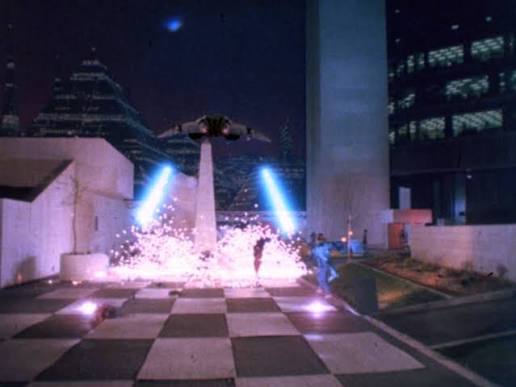
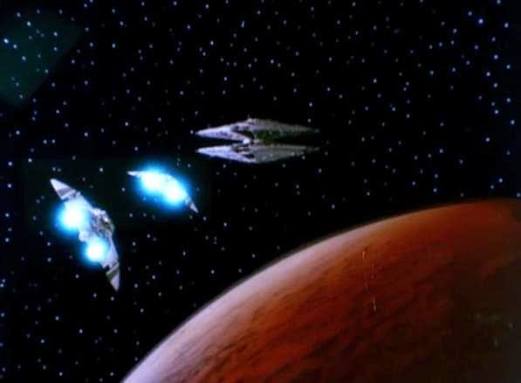
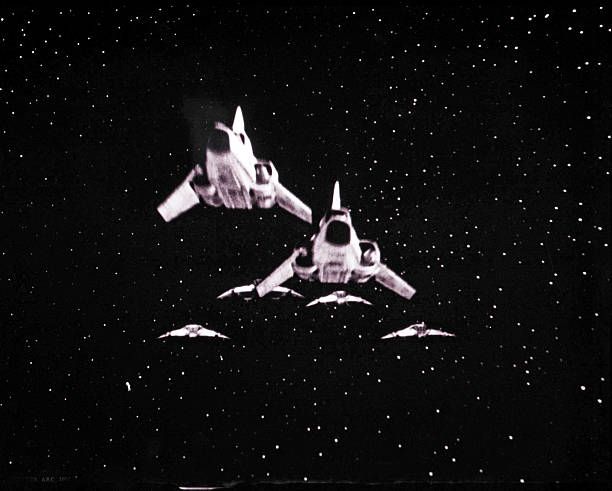
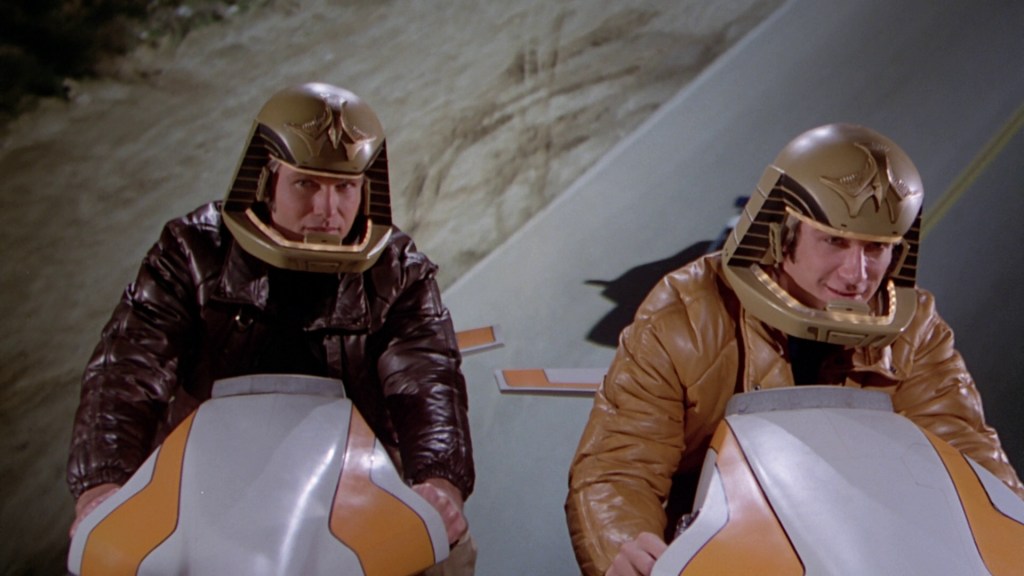
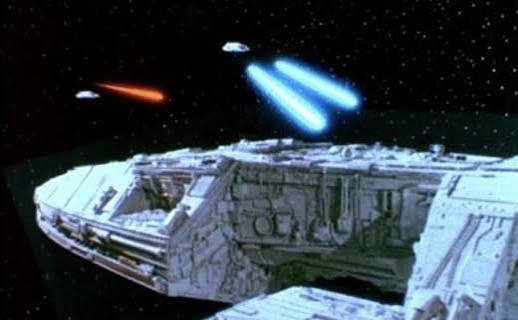
By the time of the series final editing, of which six hours of actual footage is believed to have been shot for the opener, editorial changes were still happening, including certain scenes considered too violent being trimmed for television audiences. It was also decided that the opener’s original ending needed to be changed. The original ending involved the survivors of the fleet, having escaped a new Cylon trap ending in a final celebration, and having a seriously ill Serina sneak away from Apollo and Boxey in order to die alone. In the end, the sequence was thankfully changed and the finale was filmed with Apollo and Starbuck, in their Colonial Vipers, tricking a Cylon Basestar ship into crashing into Carillon and causing that fuel rich planet’s ultimate destruction. This is what Universal was looking for. The impact of an ending that was spectacular on the small screen. This move proved to be a much more satisfying conclusion. Bringing such major sequences , like the spectacular conclusion, to life effects-wise, including the stunning space battle opener with the destruction of humanity and the Colonial Fleet traversing a deadly space minefield, many of which would have to be filmed and re-filmed with the constant changes of the scripts and network decisions, would cause problems in the relationship between Larson and John Dykstra, so much so that angry technicians snuck in some choice words in to a city lights display seen at the beginning of the opener’s Cylon Raider fleet attack on the planet Caprica.
Larson reportedly also felt that Dykstra’s team spent too much time and money developing special effects technology, which also caused the production of Star Wars (which Dykstra worked on previously) to run behind schedule. These tensions contributed to Dykstra not being invited back for the Star Wars sequel, The Empire Strikes Back.
Courtesy of Universal
Finally airing as planned, Battlestar Galactica launched its three hour time slotted pilot episode, of which no series of that time would receive as much advance attention from the press publicity in the pages of so many American newspapers and magazinesk. The series launched its epic opener with a huge record breaking ABC Sunday Night Movie audience of nearly 65 million tuning in.
BATTLESTAR GALACTICA’s opening adventure, titled SAGA OF A STAR WORLD, though immensely costly, had indeed been successful, and would go on to spawn a line of merchandise, consisting of books, toys, games and MARVEL comic books, and even a short term ride at the Universal Studios theme park in Los Angeles, titled Battle of Galactica.
Getty Images/ on the set of Battlestar Galactica 1978
Courtesy of Universal
Creating Battlestar Galactica proved to be a difficult task, the pressure on its creators, cast, crew, and everyone else involved, would take its toll in the months ahead as the ongoing weekly series evolved. Ultimately, the show would never totally recover from being rushed, and the combination of high costs, network interference, and competition from other shows led to declining ratings, sealing the series’ cancellation.
Courtesy of Universal
Shortly after the show’s cancellation, the network had a change of heart and spoke with Larson about writing a two-hour movie in which the Galactica makes it to Earth, to which he agreed. However, it’s not quite clear if that was to be a series finale or an attempt to keep the show going, but it eventually morphed into the much-maligned Galactica: 1980 spin-off series. That show had the colonists arriving at Earth several decades after the end of the first season but deciding not to make immediate contact because the Terran technology was not sufficient to ward off an attack from the Cylons. Many of the characters from the original show had been dropped and the new ones weren’t well received by the audience. It disappeared from the air after only ten episodes. Fortunately, its final episode, The Return of Starbuck, brought Dirk Benedict back for a charming and slightly sad tale, in which he and a lone Cylon have to fend for themselves on a far-off planet. The finale went on to gain cult classic fame and for many is considered one of the best of the entire Battlestar Galactica series.
But all that and more is revealed in another story…
Check out the continued story here in
THE SAGA CONTINUES. THE MAKING OF ‘BATTLESTAR GALACTICA’ – PART TWO
In the deepest reaches of space, the fight to save all human life from extinction has begun.
Courtesy of Universal
Portions of this article originally appeared in KoolTV.com
Author Chad Stevens is a graduate from Wayland Baptist University with a Business Administration degree with a concentration in Health and Marketing. After serving in the United States Navy and finishing college he discovered the world of free-lance writing. His articles have appeared in Star Wars News Net, Outerplaces, Nerdist and Movienewsnet.com as well as many other entertainment-related websites. In his free time he enjoys reading, writing, TV, collecting rare films, and spending time with his family. His favorite films are Blade Runner, Star Wars: Return of the Jedi, Jaws, Star Trek: The Motion Picture, and Fritz Lang’s Metropolis.


Leave a Reply